
A slat belt conveyor, also called a slat conveyor, carries the load on steel slats mounted across heavy chain. The chain runs on rollers in the conveyor frame, and the slats form the carrying surface. It is the construction we turn to when the parts are too heavy, too hot, or too hard on a conveyor for a lighter belt to survive.
Slat belts are not something most conveyor builders supply. They are a growing part of what Transcon builds, and every one is engineered for the application in front of it and built in our own facility in Mentor, Ohio.
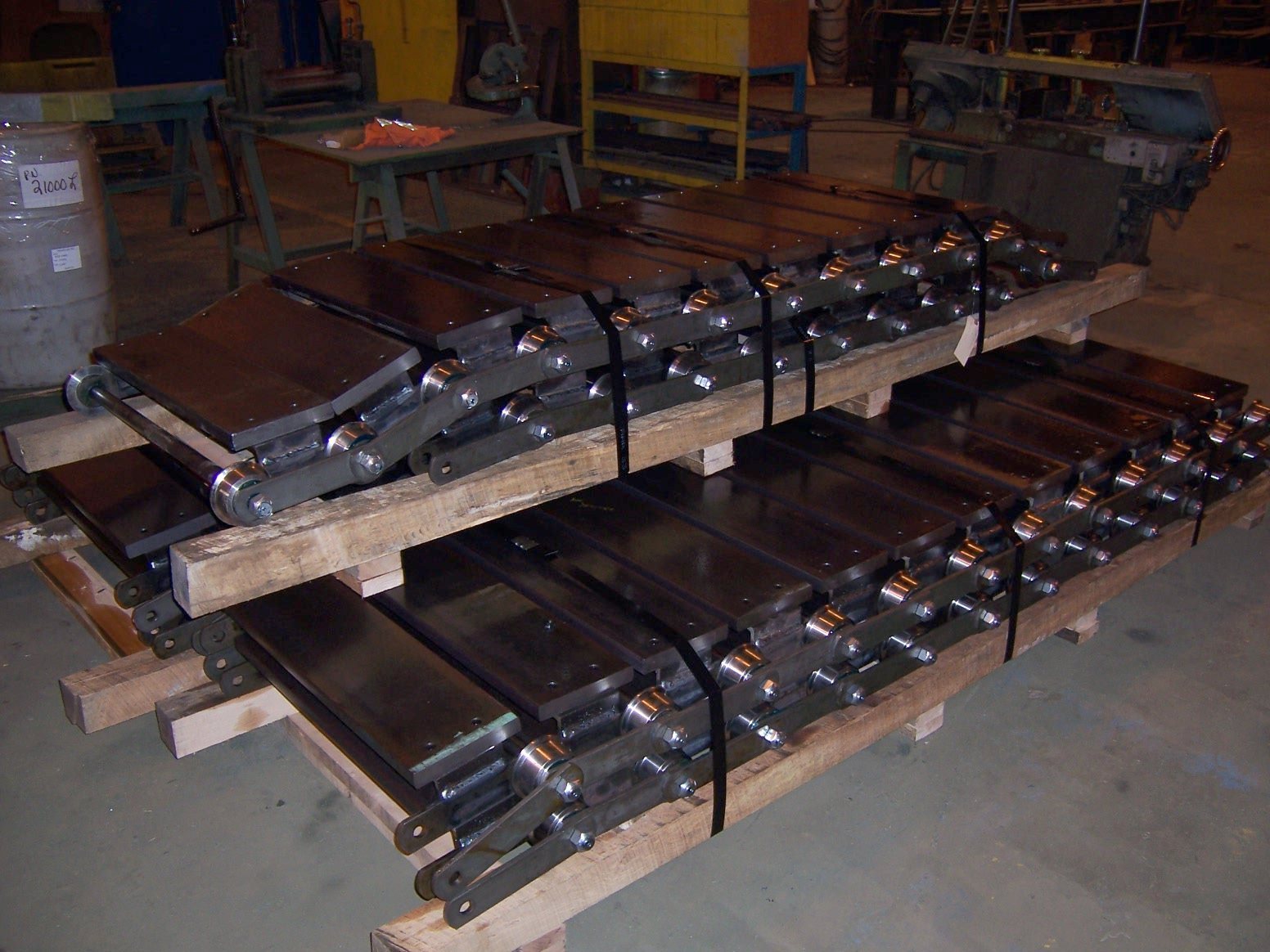
Built for Heavy and Hot
Slat belts are built for two conditions that wear out ordinary conveyors: heavy loads and hot parts. Heavy parts dropped onto the belt all shift, and parts that come off a furnace, press or mill still glowing, are what these conveyors are designed to carry.
The frame, drive, take-up and controls are engineered together with the belt, the same way we build our welded hinge steel belt conveyors. The conveyor is built around the load it will actually see, not a catalog rating.
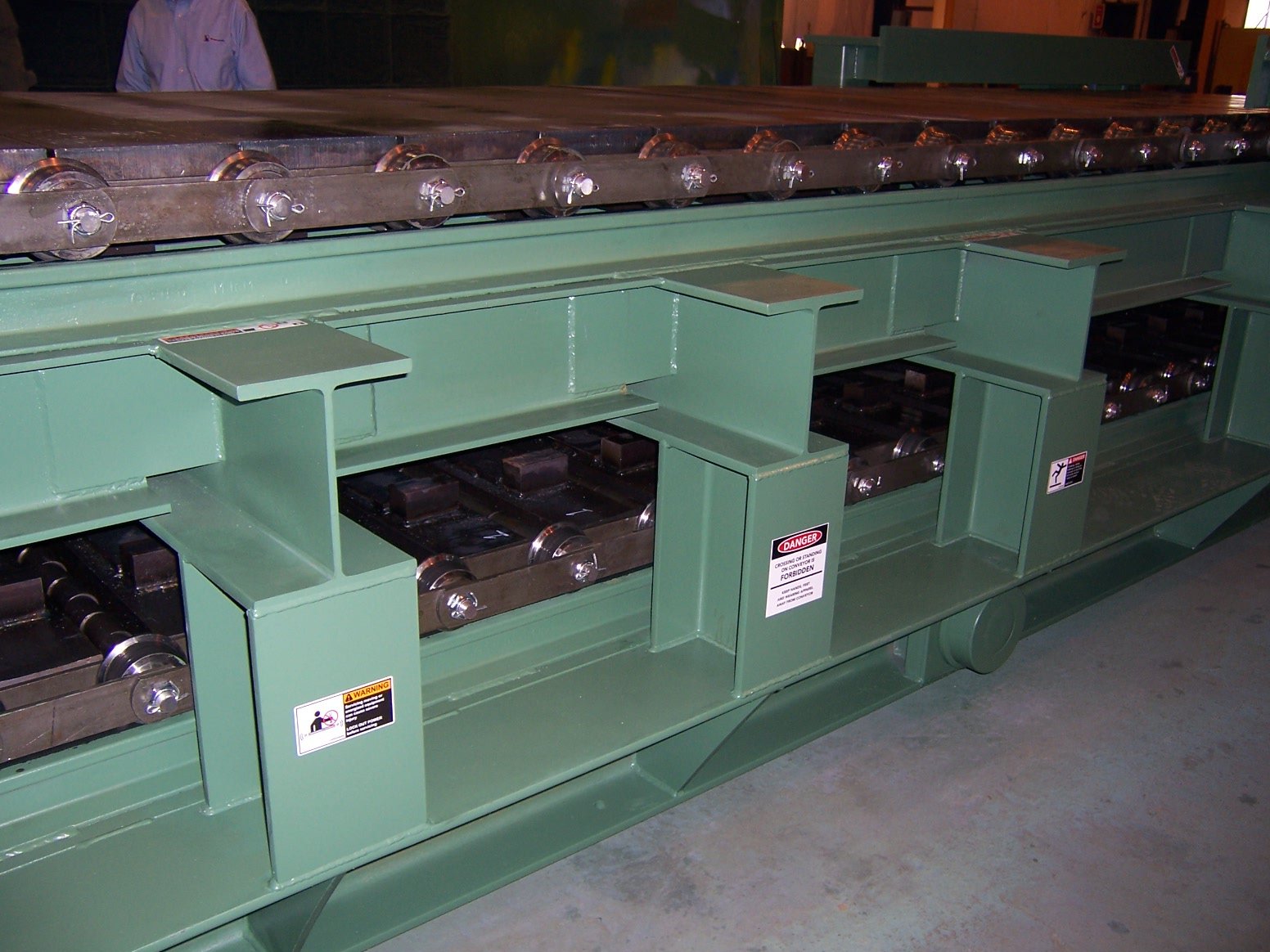
Every Dimension Is Custom
There is no standard slat belt. Slat width, slat thickness and chain pitch are all set by the application: the size and weight of the part, the temperature it arrives at, how it lands on the belt, and how the conveyor fits into the rest of the line.
Engineered to the Application
- Slat width
- Slat thickness
- Chain pitch
- Overall belt width and conveyor length
- Frame, drive and take-up
What We Need to Know
- What you are moving and how much it weighs
- How hot it is when it reaches the belt
- How it is loaded onto the conveyor
- The layout it has to fit
- What is failing on the conveyor you have now
Where Slat Belts Run
- Recycling - heavy, mixed material loaded and dropped onto the belt every shift.
- Forging - hot, heavy parts coming off the furnace, press and trim lines.
- Hot mills - hot product and sustained heavy loads on lines that are not supposed to stop.
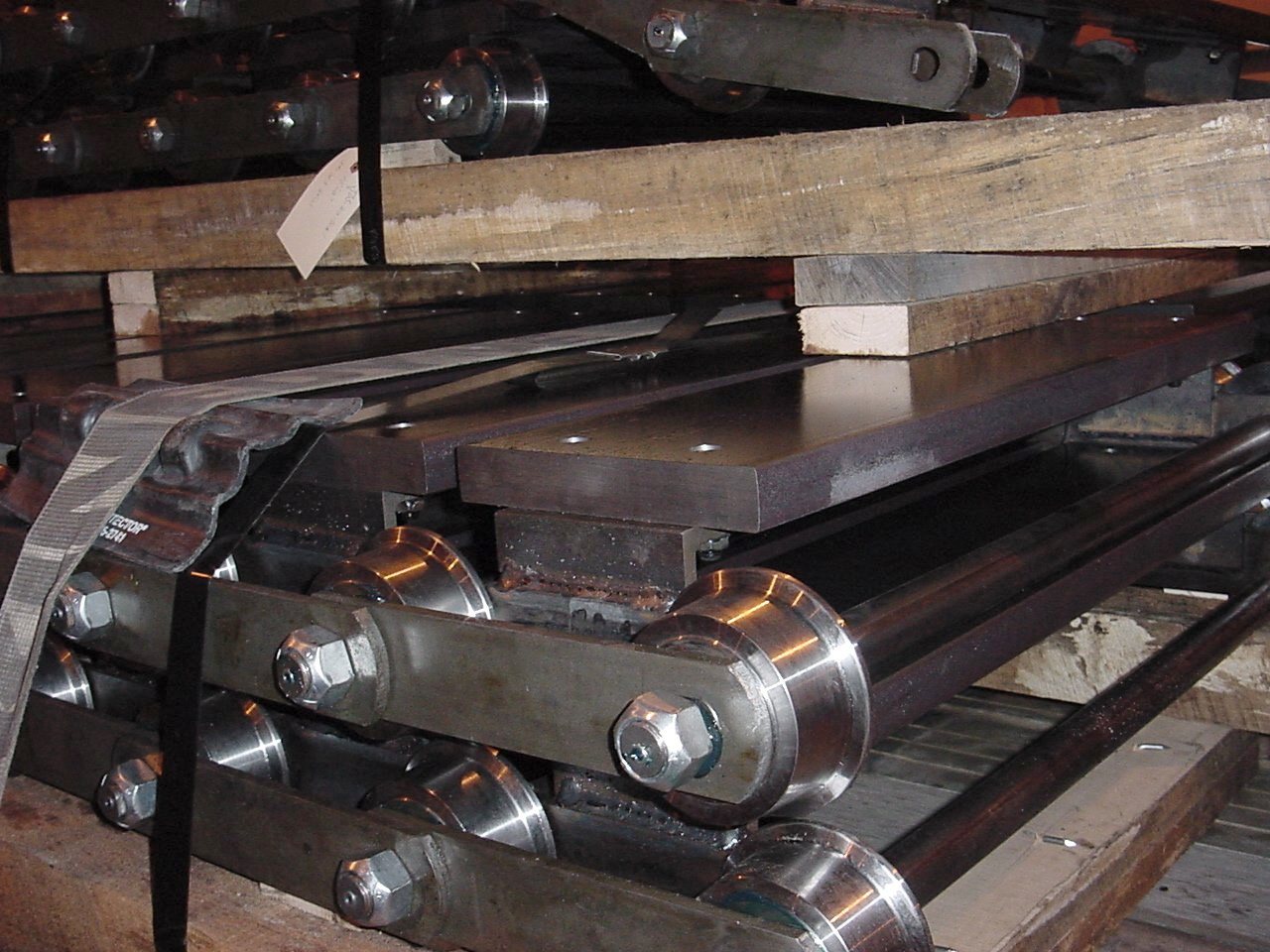
Engineers, Not Sales Reps
Every slat belt starts with a conversation with an engineer who can look at the application and tell you what it needs. If you already run a slat conveyor that keeps failing, tell us what is wearing out. Often the answer is in the frame, the drive or how the parts land on the belt, not just the belt itself.
Related Solutions
- Welded Hinge Steel Belt Conveyors - steel belt for scrap, chips, heat and heavy impact
- Conveyors for Forging - bar belt, Continuous Radius Belt and more for hot parts
- Steel and Aluminum - mill-duty systems for heat, scale and sustained load
- Recycling and Waste Processing - conveyors for unsorted, unpredictable loads
- Custom Conveyor Systems - for layouts nothing standard fits
Spec a slat belt for your application
Tell us what you are moving, how heavy and how hot it is, and how your line runs. An engineer will work through the slat, chain and frame with you.