
A 367-Foot Replacement Belt for a Conveyor We Built in 1992
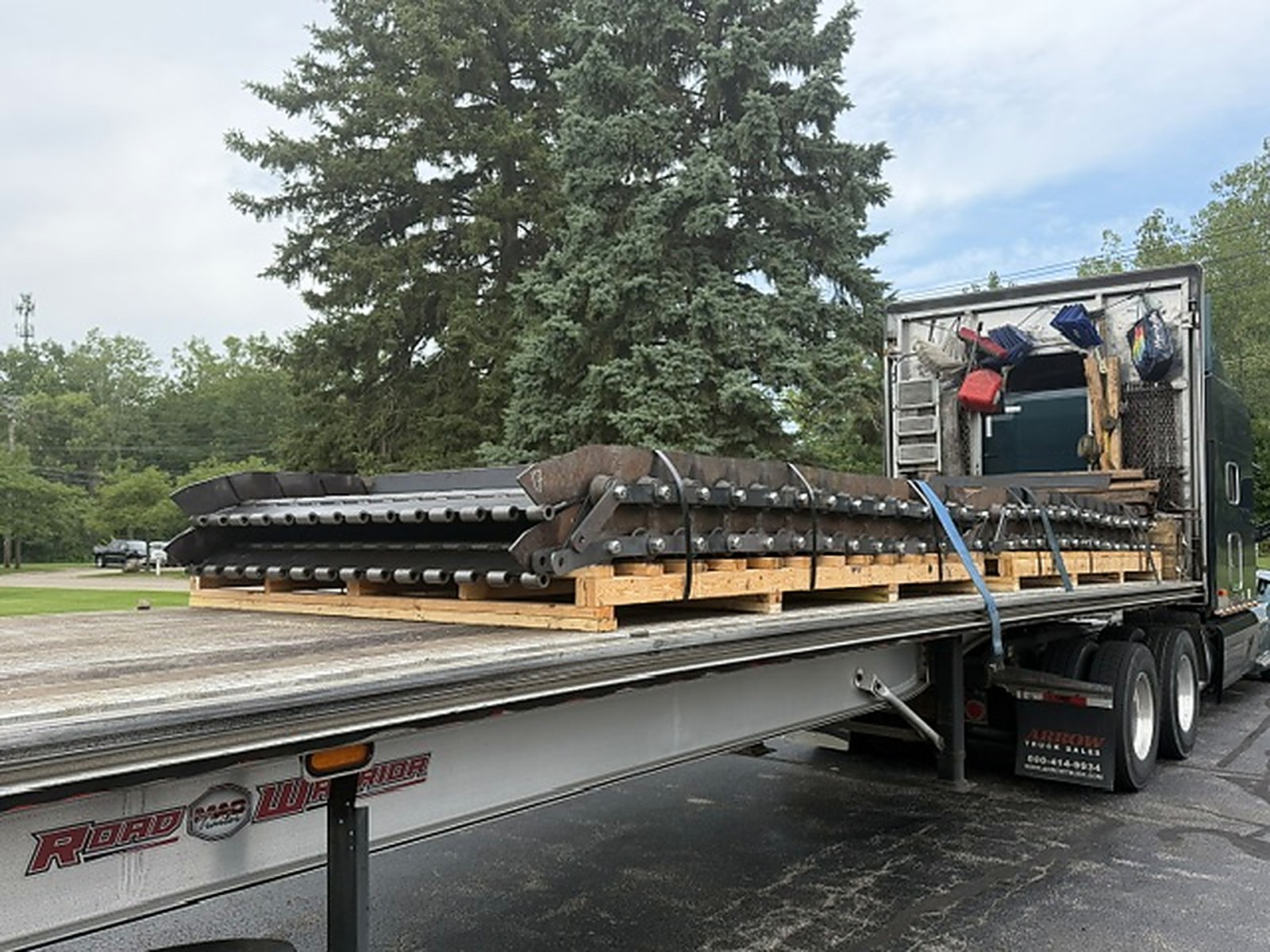
The most useful thing we can tell you about this project is what did not happen for 34 years.
In 1992, Transcon designed, built and delivered a steel belt conveyor to one of the largest domestic steel producers in the United States. That conveyor is still in service today. Not rebuilt into something else, not limping along on patched sections. Running.
This year the same producer came back for a replacement belt. Here is what that took.
The belt
- 367 feet long
- 81 inches wide
- 90,000 pounds of steel, or 45 tons
- Almost one mile of welding across all components
- Special cleats and wear pads engineered for the application
- Built on Transcon’s proprietary welded hinge design with fully welded pipe loops
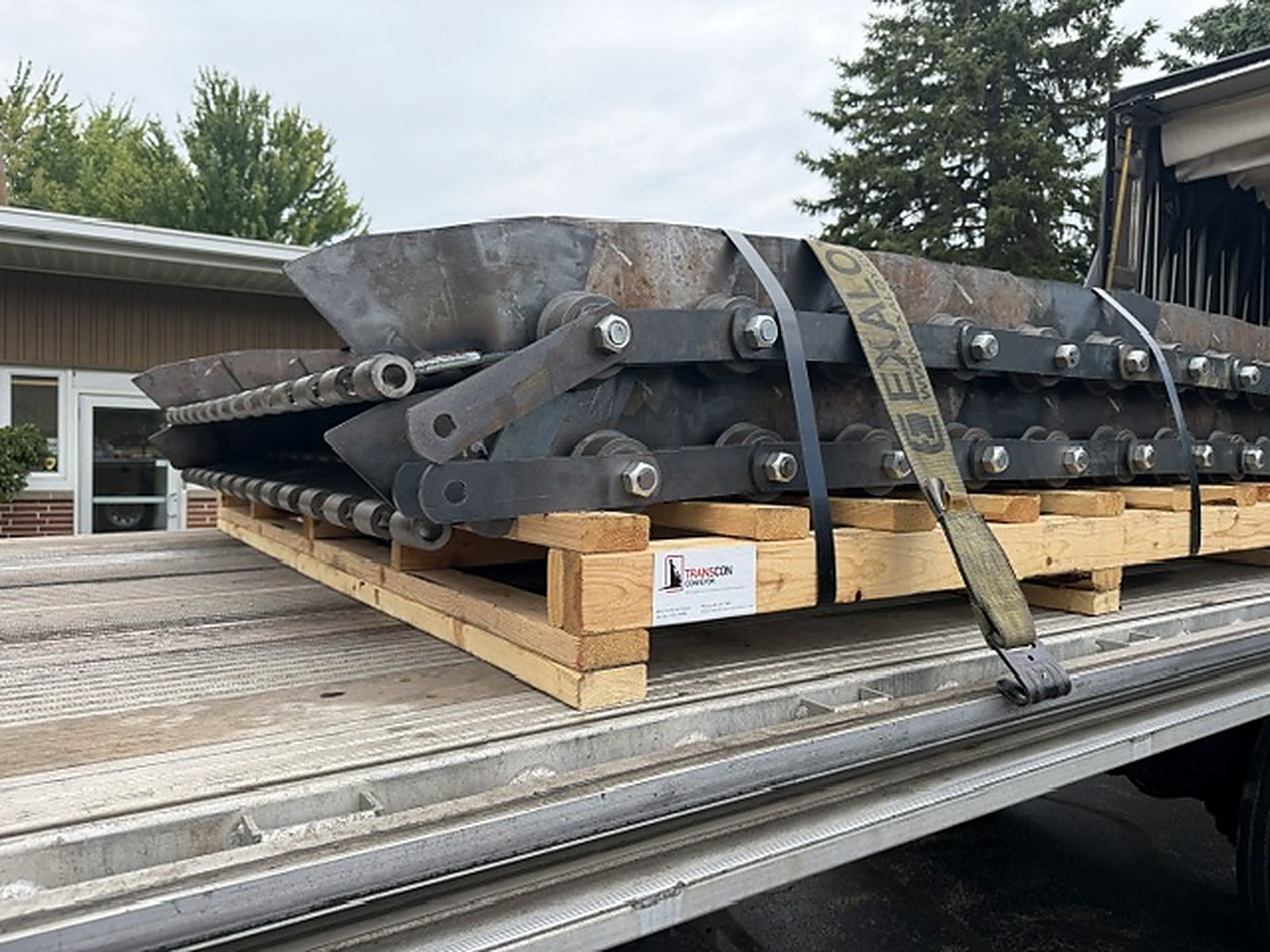
Those are not catalog numbers. There is no shelf anywhere that holds a 367-foot, 81-inch steel belt, and there is no version of this order that gets filled by looking up a part number.
Why a replacement belt is an engineering job, not a purchase order
A replacement belt has to go into a machine that already exists. Frame geometry, sprocket pitch, take-up travel, drive arrangement, discharge height, the way the load actually falls onto the belt in that specific bay. All of it was set 34 years ago and none of it has moved.
Get any of that wrong and the belt does not fail immediately. It tracks a little off, wears a little unevenly, and eats itself over a year while the maintenance team chases symptoms.
This is where the 1992 build date stops being a nice anniversary and starts being the reason the project worked. Transcon built the original conveyor, so Transcon still has the original drawings. The replacement belt was engineered against the actual machine it was going into, not against a general spec for a belt of roughly that size.
We do this for conveyors we did not build, too. If you have somebody else’s conveyor running a line you cannot afford to lose, that is a conversation worth having before the belt gives out, not after.
The hinge is the reason it lasted
Most steel belts fail at the hinge. In a steel mill environment, heavy impact, high temperature, abrasive material, continuous duty, that weak point is found quickly.
Transcon’s welded hinge steel belt uses fully welded pipe loops instead of a formed loop that can elongate and tears out. It is more work to build, which is where a good part of that mile of welding goes, and it is the single biggest reason a 1992 Transcon conveyor is still moving material in 2026.
The replacement belt was built the same way. The producer is not buying a belt that gets them to the next shutdown. They are buying the next several decades of that conveyor.
Delivered early
The belt shipped ahead of the promised date.
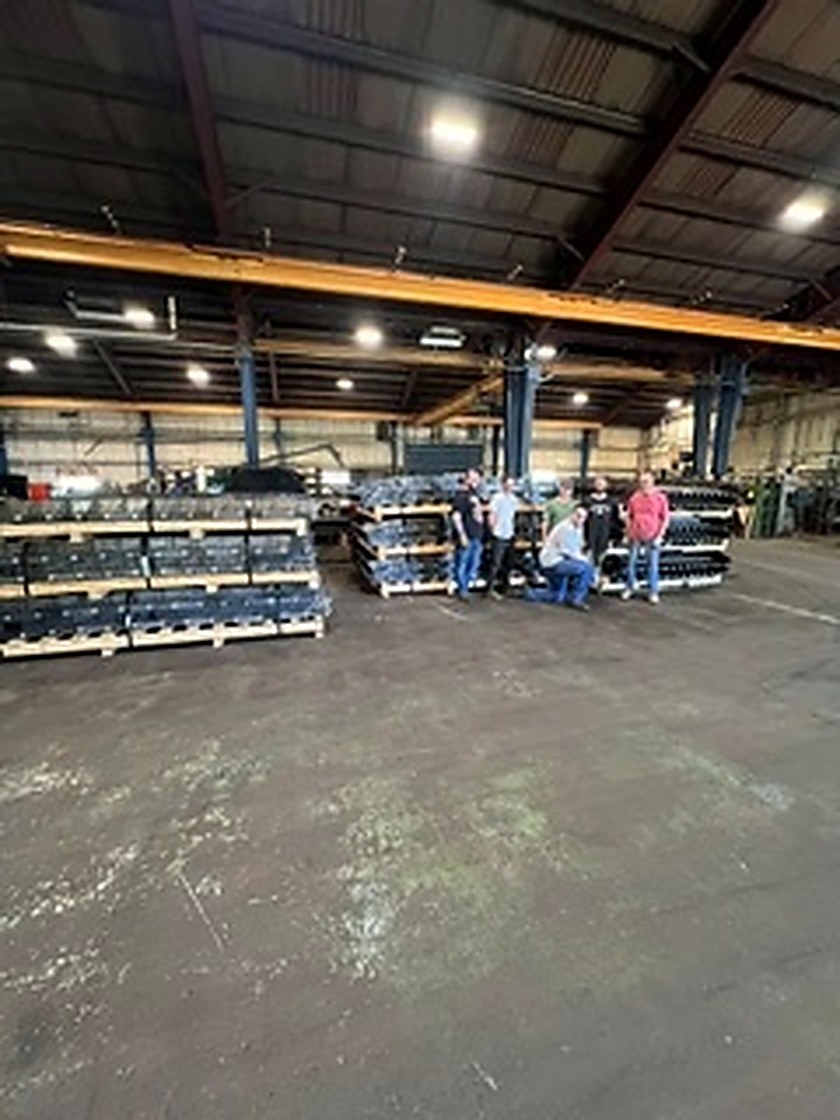
In a mill, that matters more than it sounds. Belt changeouts happen inside a planned outage window, and the whole outage is scheduled around the parts arriving. Early means the crew is not standing around waiting, and it means the schedule has slack in it if something else on the line turns out to need attention while the line is down.
The people who built it
Every one of those 90,000 pounds was cut, formed, fitted and welded by the fabrication team in Mentor, Ohio. A mile of weld on a belt this size is not automated work. It is skilled hands doing precise, repetitive, physically demanding work to a tolerance that has to hold up for the next 30 years.
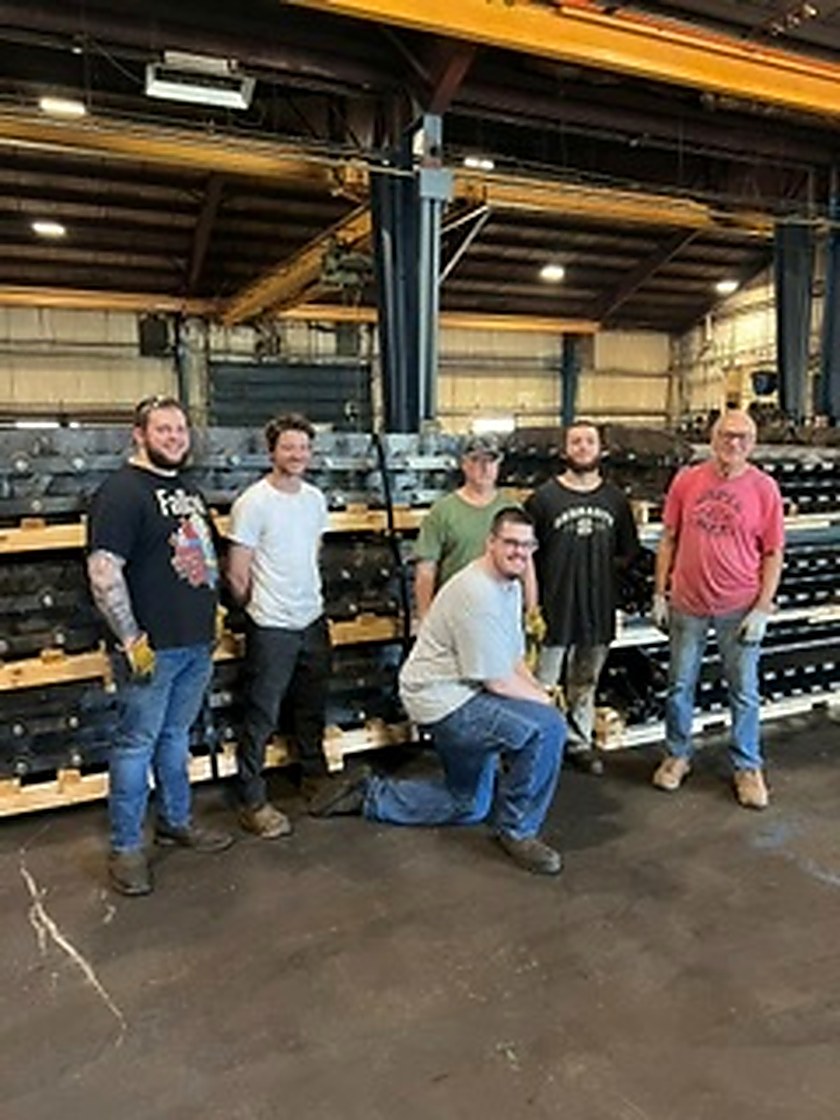
They are the reason this is a case study and not a warranty claim.
Supporting the rebuild of American steel
There is real investment going into domestic steel and aluminum production right now, and a lot of it is landing on equipment that was installed decades ago and never expected to still be working. Transcon has been building conveyors in Ohio since 1959. We are glad to be part of keeping that infrastructure running.
If you are staring at an aging conveyor
The questions worth answering before the belt fails:
- Do you have the original drawings, or does anyone?
- Is the wear pattern telling you the belt is done, or that something upstream is out of alignment?
- Is a replacement belt the right call, or is this a rebuild?
- What is the actual outage window, and what has to be on site before it opens?
Those are engineering questions, and at Transcon they get answered by an engineer. There is no salesperson between you and the person who can diagnose the machine.
Send us the details on your conveyor and we will tell you what we would do, including when the answer is that you do not need a new belt yet.