When it comes to maintaining conveyor belt life, the type of take-up used can extend it - or cut it short. Over time, normal wear, heat fluctuation, and overloading stretch a conveyor’s belting. The take-up is what keeps tension correct as that happens. Get it wrong and you accelerate wear on the belt and every drive component; a loose belt can cause damage just as easily as an overly tight one.
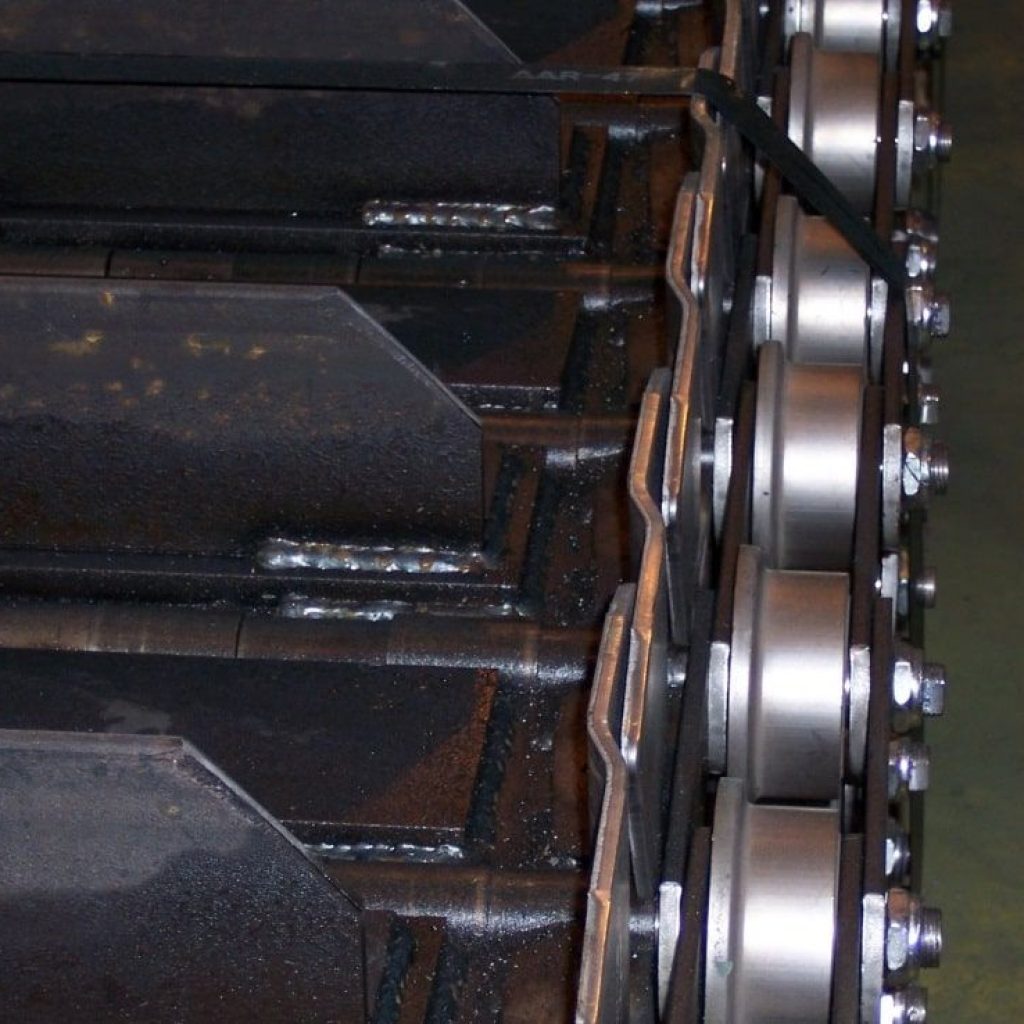
The Take-Up Styles We Use
There is no single right take-up. The correct choice depends on where the conveyor’s infeed and discharge ends sit, how accessible they are for maintenance, and how extreme the temperatures and loading get.
Standard Tail-End Take-Up
Located at the infeed, a standard tail-end take-up is a bearing resting on a slide bar, connected to a take-up screw. Tension is controlled by tightening or loosening that screw, and it should be checked regularly based on the volume of material being conveyed, heat fluctuation, and normal belt wear. The downside shows up when the tail end of the conveyor is not easily accessible.
Standard Head-End Take-Up
Very similar to the tail-end version, a standard head-end take-up sits at the discharge end - a bearing on a slide bar with a take-up screw. Its advantage is location: it moves the adjustment point to the discharge end, which is helpful when the tail end of the conveyor is somewhere inaccessible.
Spring-Loaded Take-Up
Located on the infeed (tail end), a spring-loaded take-up uses a spring to counteract the change in tension a belt is subject to. It keeps consistent tension and adjusts automatically over the life of the belting. It is used when both the infeed and discharge ends are inaccessible for maintenance. Because of the constant movement, the spring wears over time and needs to be replaced, and extreme temperatures or extreme loading can compromise it.
Air-Controlled Take-Up
An air take-up is located on the infeed (tail end) and uses an air cylinder to counteract changes in belt tension. It keeps consistent tension and adjusts automatically over the life of the belting, and like the spring version it suits conveyors where both ends are inaccessible. An air take-up needs more room and a supply of shop air at the required psi, but it delivers steady, hands-off tension control.
Choosing the Right Take-Up
The right take-up comes down to access and duty cycle: how reachable the conveyor’s ends are, how often you can check tension by hand, and how extreme the heat and loading get. A manual screw take-up is simple and inexpensive where the end is accessible; a spring or air take-up earns its keep when the conveyor is buried in a line and nobody can get to it. Proper tensioning is closely tied to overload and jamming protection and to the belt construction covered in our steel belt conveyor specifications. When a belt has stretched past adjustment, it is time for belt replacement - and Transcon also rebuilds conveyors back to like-new tension and tolerance.
Not sure which take-up your conveyor needs?
Send us your conveyor layout and duty cycle and our engineers will recommend the right take-up - or retrofit a better one onto an existing line. Need a replacement take-up part? We build those too.